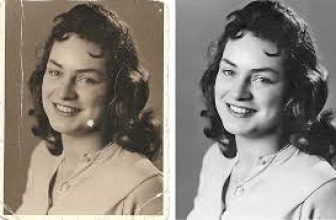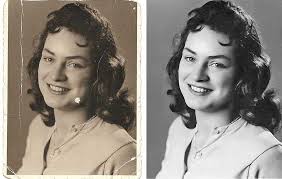
Photographs are more than mere images; they are windows into our past, vessels of heritage, and personal artifacts of moments that tell our stories. As technology leaps forward, so does our capacity to maintain and enhance these timeless treasures. Here, at the fascinating crossroads of artificial intelligence (AI) and classic photo preservation, old meets new, enabling us to breathe new life into pictures that otherwise risk fading into obscurity.
Harnessing AI for Restoring Photographic Gems
The venture of preserving old photographs is not merely about keeping them safe from physical deterioration but also about ensuring their visual fidelity can be restored or even enhanced. That’s where AI old photo restoration technology comes into play. Revolutionary AI tools today are equipped with the capability to fix scratches, repair damages, and even colorize aged, black-and-white photos with impressive accuracy. The traditional, often labor-intensive techniques of photo restoration required professional skills and considerable time. However, AI has democratized this process, making it accessible to everyone.
What makes AI-driven tools stand out is their ability to learn from numerous datasets, which allows them to perform complex edits like removing blemishes or correcting faded colors with just a click. Users without any professional editing skills can rejuvenate their cherished memories, giving them a new lease on life without compromising the authenticity of the original photograph.
The Process and Impact of AI in Photography Preservation
The intricate process of old photo restoration AI leverages deep learning algorithms. These algorithms analyze a vast array of parameters such as texture, depth, color, and damage extent. By comparing the input (damaged photos) with thousands of reference images and restoration outcomes, the AI learns the most effective patterns and techniques for photo restoration. The result is an automatic correction that maintains the photo’s original spirit, enhancing it while keeping its historical essence intact.
Indeed, the impact of integrating AI into photo preservation is profound. Not only does it make sentimental and heritage conservation easier and more affordable, but it also promotes a greater engagement with our personal and collective histories. As more individuals have access to tools that can restore and preserve old photographs, there’s a renewed interest in ancestral stories and bygone eras, enriching our understanding of history and our place within it.
The Ethical and Aesthetic Dimensions
While the technological aspects are indeed thrilling, the implementation of AI in preserving photographs also touches on ethical and aesthetic considerations. The question of how much restoration or alteration should be done to historical images is significant. However, AI tools are typically designed with options that allow users to choose the extent of restoration, ensuring that the essence of the original image is retained while making necessary improvements.
Another aspect is the aesthetic authenticity that AI can maintain or sometimes enhance, ensuring that restored photos remain faithful to their time by not over-modernizing them. This delicate balance managed by AI helps in preserving the integrity of historical artifacts while making them more accessible and relatable for future generations.
For more insights into the broader scope of artificial intelligence beyond photography, the following resource can be instrumental: https://en.wikipedia.org/wiki/Artificial_intelligence.
Bringing it Together
The dance between advanced AI technologies and classic photo preservation is a testament to how innovative tools can serve our historical appreciation. As AI continues to evolve, it promises not only to protect but also to enrich our photographic legacies, ensuring that precious memories are not lost to time but shared and cherished across generations. By embracing these advancements, we keep the past alive in its most vivid form, ever ready to tell its stories to a world ever eager to learn.