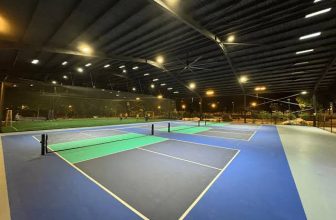
Pickleball Court Flooring: Complete Guide to Surface Types, Materials, Cost & Installation (2026)

Pickleball is one of the fastest-growing sports worldwide, and the quality of pickleball court flooring plays a major role in player performance, safety, durability, and long-term maintenance cost.
Whether you are building a court for a sports academy, residential society, school, club, or private villa, selecting the right flooring system determines how the court performs for the next 10–20 years.
This comprehensive guide explains pickleball court flooring types, construction layers, materials, costs, installation process, and expert recommendations — especially for Indian conditions.
What Is Pickleball Court Flooring?
Pickleball court flooring refers to the specialized sports surface installed over a concrete or asphalt base to provide:
-
Consistent ball bounce
-
Anti-skid player movement
-
Shock absorption
-
Weather resistance
-
Long-term durability
According to international equipment standards, outdoor pickleball courts ideally use concrete or asphalt bases coated with textured acrylic sports surfacing to ensure safe traction and wear resistance.
Why Flooring Matters in Pickleball Courts
Unlike tennis or badminton, pickleball uses a lightweight perforated ball, making surface consistency extremely important.
Poor flooring causes:
-
Irregular ball bounce
-
Player injuries
-
Slippery movement
-
Faster surface damage
-
High maintenance costs
A professionally designed surface ensures tournament-level play and long court life.
Types of Pickleball Court Flooring
1. Synthetic Acrylic Pickleball Flooring (Most Popular)
✅ Industry Standard Surface
Synthetic acrylic flooring is the most widely used pickleball court surface worldwide.
It consists of multiple acrylic coating layers applied over concrete or asphalt.
Key Features
-
Seamless textured surface
-
Excellent grip & traction
-
Accurate ball bounce
-
UV & weather resistant
-
Custom color combinations
Acrylic systems dominate professional courts because they provide consistent performance while remaining cost-effective for large facilities.
Best For
-
Outdoor pickleball courts
-
Clubs & academies
-
Schools & societies
-
Tournament facilities
Typical Lifespan
-
5–8 years before resurfacing
2. Cushioned Acrylic Flooring
This is an upgraded version of acrylic flooring that includes rubber or cushion layers beneath the surface.
Advantages
-
Reduced joint stress
-
Player comfort during long games
-
Injury prevention
-
Professional play feel
Cushioned acrylic courts are highly preferred for facilities serving senior or recreational players.
Best For
-
Premium clubs
-
Indoor arenas
-
High-usage sports complexes
3. Modular Interlocking Sports Tiles
Modular tiles are polypropylene or composite panels installed over an existing base.
Benefits
-
Fast installation
-
Water drainage system
-
Replace damaged tiles easily
-
Portable or temporary courts
These surfaces provide good shock absorption and quick playability after rain due to drainage gaps.
Limitations
-
Slight variation in ball response
-
Requires level base
-
Different professional play feel
Best For
-
Rooftop courts
-
Multi-sport areas
-
Residential courts
-
Temporary installations
4. Indoor Wooden Flooring
Indoor pickleball is often played on hardwood gym floors.
Pros
-
Natural shock absorption
-
Smooth movement
-
Multi-sport compatibility
Cons
-
Fast surface
-
Requires humidity control
-
Not suitable outdoors
Accepted for indoor play when traction standards are met.
5. Rubber / PVC / Polyurethane Sports Flooring
Used mainly in indoor multi-purpose facilities.
Advantages
-
Soft underfoot
-
Seamless installation
-
Durable for heavy usage
Best For
-
Indoor sports halls
-
Community recreation centers
Pickleball Court Flooring Structure (Layer System)
A professional pickleball court typically includes:
✅ Base Layer
-
Concrete (preferred)
-
Asphalt alternative
-
Proper slope for drainage
✅ Primer Layer
Improves bonding between base and coating.
✅ Cushion Layer (Optional)
Enhances shock absorption.
✅ Acrylic Color Coating
Provides grip, texture, and aesthetics.
✅ Line Marking
Official pickleball court markings.
Poor base preparation significantly reduces flooring lifespan.
Pickleball Court Flooring Dimensions
Standard playing area:
-
Court Size: 20 ft × 44 ft
-
Recommended Total Area: 30 ft × 60 ft
Dimensions remain the same for indoor and outdoor courts.
Pickleball Court Flooring Cost in India (Approx.)
| Flooring Type | Approx Cost (Full Court) |
|---|---|
| Acrylic Flooring | ₹4 – ₹6 Lakhs |
| Cushioned Acrylic | ₹6 – ₹9 Lakhs |
| Modular Tiles | ₹6 – ₹9 Lakhs |
| Indoor PU/PVC | ₹8 – ₹12 Lakhs |
Costs vary based on:
-
Site condition
-
Base construction
-
Cushion thickness
-
Location & labor
Indian installations commonly prefer acrylic surfaces due to climate suitability and affordability.
Indoor vs Outdoor Pickleball Flooring
| Factor | Outdoor | Indoor |
|---|---|---|
| Best Surface | Acrylic | PU / Wood |
| Weather Resistance | Required | Not Required |
| Shock Absorption | Medium | High |
| Maintenance | Low | Moderate |
| Lifespan | High | Very High |
Maintenance Requirements
Regular Maintenance
-
Sweeping dust & debris
-
Water cleaning
-
Removing algae or moss
Periodic Maintenance
-
Crack repair
-
Line repainting
-
Acrylic resurfacing every 4–8 years
Common Mistakes When Choosing Pickleball Flooring
❌ Selecting flooring without proper base
❌ Ignoring drainage slope
❌ Choosing non-textured paint
❌ Using multi-sport flooring without testing bounce
❌ Prioritizing low cost over durability
Best Pickleball Flooring Recommendation (Expert Opinion)
👉 For India & Outdoor Courts:
Synthetic Acrylic Flooring
👉 For Premium Facilities:
Cushioned Acrylic System
👉 For Rooftop / Temporary Courts:
Modular Sports Tiles
👉 For Indoor Multi-Sport Halls:
PU or Wooden Sports Flooring
Future Trends in Pickleball Court Surfaces (2026–2030)
-
Cushion technology for injury reduction
-
Eco-friendly acrylic coatings
-
Modular hybrid courts
-
Faster installation systems
-
Multi-sport convertible flooring