

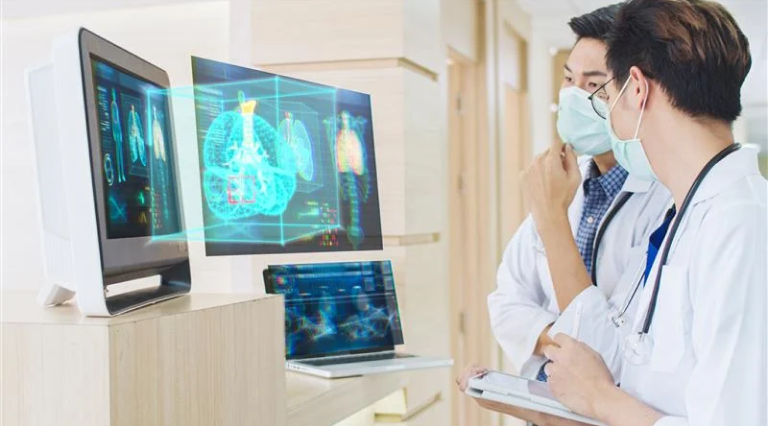
In recent years, the healthcare industry has witnessed a significant transformation with the integration of cutting-edge technologies. Among these, Artificial Intelligence (AI) has emerged as a powerful tool, revolutionizing various facets of healthcare, including safety and security in hospitals. AI video analytics, in particular, has proven to be instrumental in fortifying hospital environments, ensuring the safety of patients, staff, and visitors.
Surveillance and Intrusion Detection:
One of the primary applications of AI video analytics in hospitals is the improvement of surveillance and intrusion detection systems. Traditional surveillance cameras can be enhanced with AI algorithms to detect unusual activities, unauthorized access, or potential security breaches. AI enables real-time monitoring, automatically alerting security personnel to any suspicious behavior or unexpected movements within the hospital premises. This proactive approach ensures a swift response to security threats, preventing potential incidents before they escalate.
Crowd Monitoring and Management:
Hospitals often experience high volumes of foot traffic, leading to crowded spaces that can pose safety challenges. AI video analytics can assist in crowd monitoring and management by tracking the flow of people in different areas of the hospital. The system can detect overcrowded zones and potential bottlenecks, allowing hospital staff to take proactive measures to alleviate congestion and prevent accidents. Additionally, in the context of the ongoing global health situation, AI can help enforce social distancing measures within hospital premises.
Patient and Asset Tracking:
AI video analytics can be employed to enhance patient and asset tracking within a hospital setting. By utilizing facial recognition and object tracking algorithms, hospitals can monitor the movement of patients, staff, and valuable medical equipment. This not only aids in locating individuals within the facility but also helps prevent the unauthorized removal of assets. Improved tracking capabilities contribute to the overall safety of patients and ensure the efficient utilization of hospital resources.
Emergency Response Optimization:
In emergency situations, time is of the essence. AI video analytics can play a crucial role in optimizing emergency response protocols within hospitals. By integrating AI into security systems, hospitals can automatically detect emergencies such as fires, accidents, or security breaches. The system can then trigger immediate alerts to relevant personnel and emergency services, streamlining response times and minimizing the impact of critical incidents.
Behavioral Analysis for Threat Detection:
AI video analytics goes beyond traditional security measures by incorporating behavioral analysis for threat detection. By studying patterns of behavior captured by surveillance cameras, AI algorithms can identify anomalies that may indicate potential security threats. This could include aggressive behavior, loitering in sensitive areas, or other suspicious activities. The system can generate real-time alerts, enabling security personnel to investigate and address potential threats promptly.
Compliance Monitoring:
Hospitals must adhere to various safety and security regulations, and AI video analytics can aid in ensuring compliance. The technology can monitor adherence to safety protocols, such as the use of personal protective equipment (PPE) by staff and visitors. Non-compliance can trigger automated alerts, allowing for timely intervention and corrective actions to maintain a secure and compliant environment.
Conclusion:
The integration of AI video analytics software holds immense potential for enhancing safety and security in hospital settings. By leveraging advanced technologies such as surveillance enhancement, crowd monitoring, patient and asset tracking, emergency response optimization, behavioral analysis, and compliance monitoring, hospitals can create a robust security infrastructure. The implementation of these AI-driven solutions not only fortifies the physical safety of individuals within the hospital but also contributes to the overall efficiency and resilience of healthcare facilities in the face of evolving security challenges. As technology continues to advance, the role of AI video analytics in healthcare security is poised to become even more pivotal, shaping the future of hospital safety.


