You visit the beach. You can work outside and also play outdoors. Outdoor activities like boating, sailing, and hiking are all great. The surf, the sand and getting a great tan are all things you love. The sun’s rays are constantly beating down on your skin, causing damage. Do you want to live in fear when the danger of skin cancer is looming?
UV and sun protective experts radicool Australia says this “You can’t! You can still enjoy the outdoors with a little knowledge and practice. You can avoid a severe burn by wearing the right clothing and accessories”.
All those acronyms that you hear:
UVA
UVA (Ultraviolet A), are long-wave UV rays that penetrate skin deeper but don’t usually cause burns. They are believed to be the primary cause of skin wrinkling and leathering. The ozone layer does NOT block UVA.
UVB (Ultraviolet B), are short-wave ultraviolet rays that can cause skin burns. While they penetrate deeper, they strike the skin with greater force. The ozone layer partially blocks UVB, which has led to more damaging rays reaching the surface.
You may also have heard of UVC, which is shorter and thus more powerful rays. These rays are deadly for small organisms and plants, but they are blocked completely by the ozone layer. This could become a serious problem in the future.
Sunscreens used to only block UVB rays a few years back, but most sunscreens today block both types of UV rays.
Clothing and SPF
You now have an idea of what measurements are used to protect your skin from the sun. How does clothing protect you? Although not all clothing is created equally, it’s easy to identify which clothes offer low and high sun protection.
The least protection is offered by thin, lightweight white cottons. The UV rays will penetrate your skin more easily if the material is thinner. Weave is looser and allows for gaps in the fabric. The darker the shirt, the better the protection.
Because of their chemical composition and tighter weaving, polyester, nylon, and other synthetic fibers offer greater UV protection.
Wearing wet clothing will provide less protection. While many people swim in a white T-shirt, SPF protection is significantly reduced when the fabric becomes wet. Wearing a tshirt while swimming is a good idea.
The SPF value of a cotton garment can be increased by washing it. Because of the shrinkage caused by washing and drying, the fibres will become closer together. There are also UV-blocking detergents that can temporarily increase the sun protection of washed clothing.
Simply hold the fabric up to the sun to determine its natural sun protection. You can see through the fabric if you can. The more the sun rays penetrate the fabric, the less protection you have.
Scale of the SPF:
AS per American Academy of Dermatology
- 3 : A white, average-wet t-shirt made of cotton
- 7 : A white, dry, average t-shirt
- 10-15 : A green, or similar dark cotton tee-shirt
- 50 : Dark velvet
- 1,700 : A long-sleeved denim shirt or pants
Swimwear and SPF
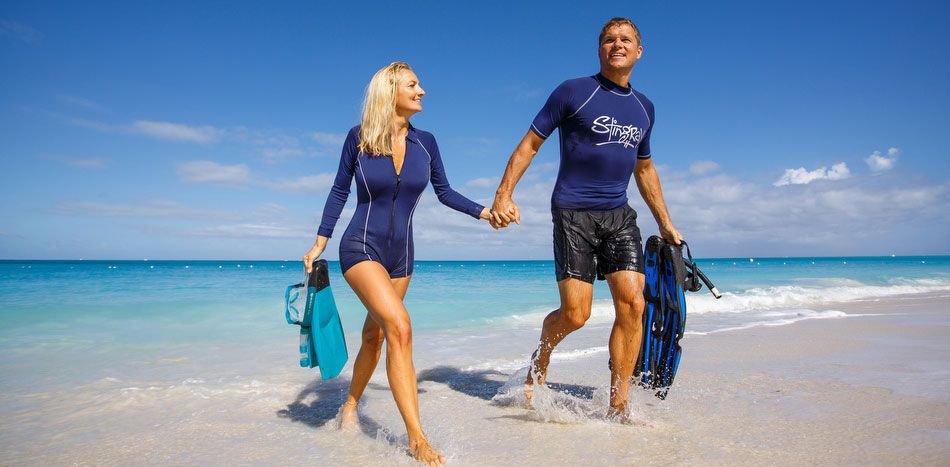
Swimsuits should be quick-drying, lightweight, durable, and flexible. Synthetic fibers like spandex and nylon, all of which have high natural sun protection factors, are the most popular for beach wear. The rating of a suit is the same as regular cotton: the darker the dye, the higher the rating. All general synthetics provide adequate protection with a minimum SPF of 20. SPF protection for darker colors, such as blue, red, and purple, is 50 to 100, respectively.
The SPF of synthetic material is similar to cotton in that it decreases with the fabric’s stretching and dampness, but not significantly. The SPF rating of synthetic materials is usually high, so even though they have lower ratings, they still provide enough protection. Some materials actually have higher protective properties when they are wet.
Modern swimsuits include performance-enhancing swimwear made from high-tech materials and swimsuits that block UV-rays. There are also swimsuits with reduced SPF to allow you to tan the fabric.
Tan Swimwear
Synthetic microfibers, or a special blend of Nylon/Spandex, allow the sun’s rays into the skin at a controlled rate for those who love to tan. Porous material provides a uniform tan across the body and the equivalent to SPF 6-10. The material is thin but not transparent. This means that you are at higher risk of burning yourself, so it is best to limit your exposure to the sun.
Swimwear that blocks UV-rays
This is a relatively new area, with many companies now offering swimwear and clothing that blocks the sun’s UV radiation. Although most materials provide adequate protection, some materials are made with specially woven synthetic materials or treated with UV-blocking chemicals. You will see their UPF rating on the label. Anything above 25 is considered “very good protection.”
Contact US
Radicool Australia
6/32 Silkwood Rise, Carrum Downs, VIC, 3201, Australia
Phone: (03) 9562 6633
Email: inquiries@radicoolaustralia.com
Company Hours: Monday – Friday: 8:00 AM-5:00 PM