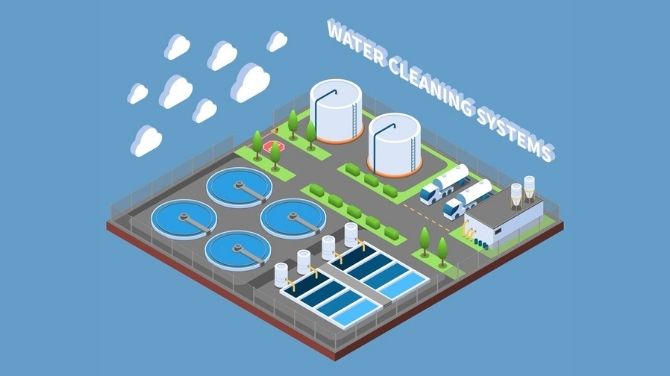
Water is one of the Earth’s most precious resources, vital to life and essential for a wide range of human activities. However, with increasing water scarcity and environmental concerns, it has become crucial to find innovative ways to conserve and manage water resources efficiently. Water recycling systems have emerged as a solution to address these challenges, allowing us to reuse water in various applications. In this article, we will explore the significance of water recycling systems, their working mechanisms, benefits, and the role they play in promoting a sustainable and responsible approach to water management.
The Significance of Water Recycling Systems
- Water Scarcity Mitigation: Water scarcity is a growing concern globally, affecting both arid regions and urban centers. Water recycling systems offer a practical means to mitigate water scarcity by reusing and conserving water resources.
- Environmental Protection: Traditional water disposal methods can lead to contamination of water bodies and ecosystems. Water recycling systems reduce the environmental impact by treating wastewater to a quality that is safe for reuse or discharge.
- Resource Efficiency: Water recycling promotes resource efficiency by reducing the need for fresh water in non-potable applications. This, in turn, lowers energy and chemical consumption associated with water treatment.
How Water Recycling Systems Work
Water recycling systems employ various processes to treat and repurpose water, depending on the specific application:
- Filtration: The initial step in many water recycling systems involves the removal of solid particles and impurities through various filtration methods, such as sand or membrane filtration.
- Chemical Treatment: Chemicals like coagulants and flocculants may be used to assist in the separation of fine particles and the reduction of organic contaminants.
- Biological Treatment: In some systems, microorganisms are introduced to naturally break down organic matter in the water, converting it into harmless byproducts.
- Disinfection: Water recycling systems often include disinfection stages, using methods like chlorination, UV irradiation, or ozone treatment to kill or inactivate harmful microorganisms.
- Advanced Treatment: Depending on the intended application, advanced treatment processes like reverse osmosis, ion exchange, or adsorption may be used to achieve specific water quality requirements.
Types of Water Recycling Systems
There are different types of water recycling systems designed for specific applications:
- Agricultural Water Recycling: These systems capture and treat agricultural runoff and drainage water for irrigation purposes. They help conserve water and reduce the contamination of surface water bodies.
- Industrial Water Recycling: Industries employ water recycling systems to treat and reuse process water. This not only conserves water but also reduces industrial discharges into the environment.
- Municipal Water Recycling: Municipalities use these systems to treat wastewater from homes, businesses, and industries. The treated water can be safely used for non-potable applications like landscape irrigation, cooling, or industrial processes.
- Potable Water Recycling: Advanced water recycling systems can purify wastewater to meet drinking water quality standards. Potable water recycling systems are often used in areas with severe water shortages.
Environmental and Economic Benefits of Water Recycling Systems
- Water Conservation: Water recycling systems significantly reduce the demand for fresh water, conserving this precious resource.
- Environmental Protection: By treating and reusing water, these systems minimize the release of pollutants and contaminants into natural water bodies, preserving ecosystems and water quality.
- Energy Savings: The energy required to transport and treat fresh water is significantly reduced when water recycling systems are employed.
- Reduction of Discharge Costs: Businesses and municipalities that implement water recycling systems can reduce the costs associated with wastewater disposal.
- Sustainable Practices: Water recycling contributes to sustainability efforts by promoting responsible water management and environmental stewardship.
Challenges and Considerations
While water recycling systems offer numerous benefits, they also come with specific challenges and considerations:
- Initial Investment: Setting up a water recycling system can involve significant upfront costs for infrastructure and equipment.
- Maintenance and Operation: Regular maintenance and skilled personnel are necessary to ensure that the system operates efficiently and produces high-quality treated water.
- Public Perception: In some cases, there may be resistance from the public to the use of recycled water, particularly for potable applications.
- Regulatory Compliance: Adherence to water quality standards and regulatory requirements is crucial for the successful operation of water recycling systems.
The Future of Water Recycling Systems
The future of water recycling systems is promising, with several developments on the horizon:
- Advanced Technologies: Continued advancements in water treatment technologies will lead to more efficient and cost-effective systems.
- Decentralized Systems: Smaller-scale, decentralized water recycling systems are expected to become more prevalent, offering localized solutions to water scarcity.
- Smart Water Management: The integration of data analytics and real-time monitoring will optimize the operation of water recycling systems and improve water quality control.
- Increased Public Acceptance: Through education and outreach, the public’s perception of recycled water is likely to improve, making it more widely accepted for various applications.
Water recycling systems are pivotal in addressing the pressing issues of water scarcity and environmental protection. They play a crucial role in conserving water, reducing pollution, and promoting responsible resource management. As we move towards a more sustainable and water-conscious future, the adoption of water recycling systems is set to expand, enabling us to make the most of this essential resource while safeguarding our planet’s natural ecosystems.